
Loneliness in elderly people: how families can help

Loneliness is a feeling, not a count of visitors. The Australian Institute of Health and Welfare (AIHW) describes it as "a subjective unpleasant or distressing feeling of a lack of connection to other people, along with a desire for more, or more satisfying, social relationships".
Among Australians aged 65 and over, the share experiencing loneliness fell from 20% in 2001 to 15% in 2024, the AIHW reports from the HILDA survey. That is still a lot of older Australians, and families can help in simple ways.
Before you start
- Ask how they are, and listen. Some people enjoy time alone, and others would like more company.
- Think about what has changed lately, such as a move, a loss, or giving up driving.
- Pick one or two ideas below to start with, not all of them.
- Look after yourself too. You don't have to fill every gap on your own.
Loneliness and social isolation are not the same
Social isolation is about contact. The AIHW describes it as "having objectively few social relationships or roles and infrequent social contact". Loneliness is how a person feels. Someone can live with family and feel lonely, or live alone and feel content.
A University of Sydney study, published in September 2026, found social isolation in Australia rose from 16.9% in 2001 to 29.9% in 2023, and that older adults consistently had the highest levels.
Loneliness isn't only about age. In 2024, the AIHW reports, people aged 35 to 44 had the highest rate of loneliness, at 17%.
Make a regular call part of the week
A call at the same time each week is easy to remember. Agree on the day and time, and keep it short if that suits them better.
In one four-week trial with 240 mostly older adults, regular friendly phone calls from trained volunteers reduced loneliness, low mood and worry, compared with no calls. Our research page has the details, and what the studies don't show.
For more ideas, see how to stay in touch with elderly parents who live far away.
Make visits about doing something together
Bring something to share: a few photos, a favourite snack, a card game, or a question to get talking. Our 50 questions to ask elderly parents and grandparents are a good place to start.
If they live with dementia, Dementia Australia suggests planning visits for their best time of day, and bringing something to do, such as photos, simple craft or a snack. There are more ideas in activities for people with dementia at home.
Share everyday news between visits
Small, regular news helps: a photo of the grandkids, the garden, or a meal. A shared photo album lets family add photos for them to see any time. See how to share family photos with elderly parents.
Make the phone easier to use
If small text, tiny buttons or a busy screen make the phone hard to use, calls and messages get harder too. Try the phone settings for low vision and how to make a phone simpler before buying anything new.
Volunteer visitors and phone friends
Aged Care Volunteer Visitors Scheme: older people who may not have regular contact with friends or relatives, or who feel isolated from their culture or heritage, can be referred by an aged care service provider. People receiving government-funded aged care can refer themselves. There is a request form for yourself or someone else.
FriendLine: an anonymous phone and chat service for anyone 18 or over who is feeling lonely. You can register for a call or chat at friendline.org.au. FriendLine is not a crisis service.
Local groups can help too, such as a walking group, a library class or a community garden. Their local council is a good place to ask what's on nearby.
Help and support
- If you're worried about how they're feeling: encourage them to talk to their GP.
- Lifeline: 13 11 14, for crisis support.
- Carer Gateway: 1800 422 737, Monday to Friday, 8am to 5pm, if you care for them.
- My Aged Care: 1800 200 422, for government-funded aged care services.
- In an emergency: call Triple Zero (000), or your local emergency number outside Australia.
Calls and memories in one calm place
No app replaces people. But if a phone is part of how they stay in touch, it helps when the people they call are easy to find.
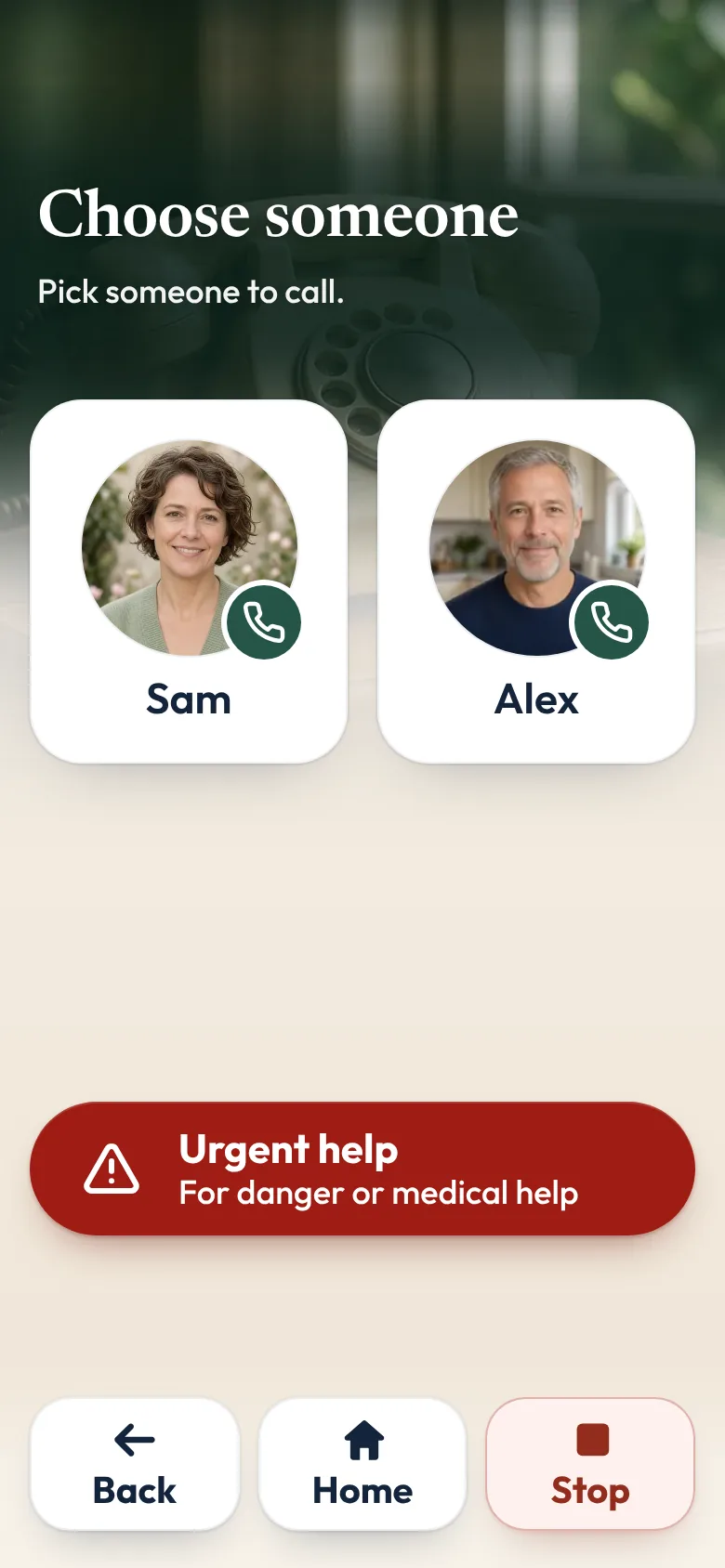
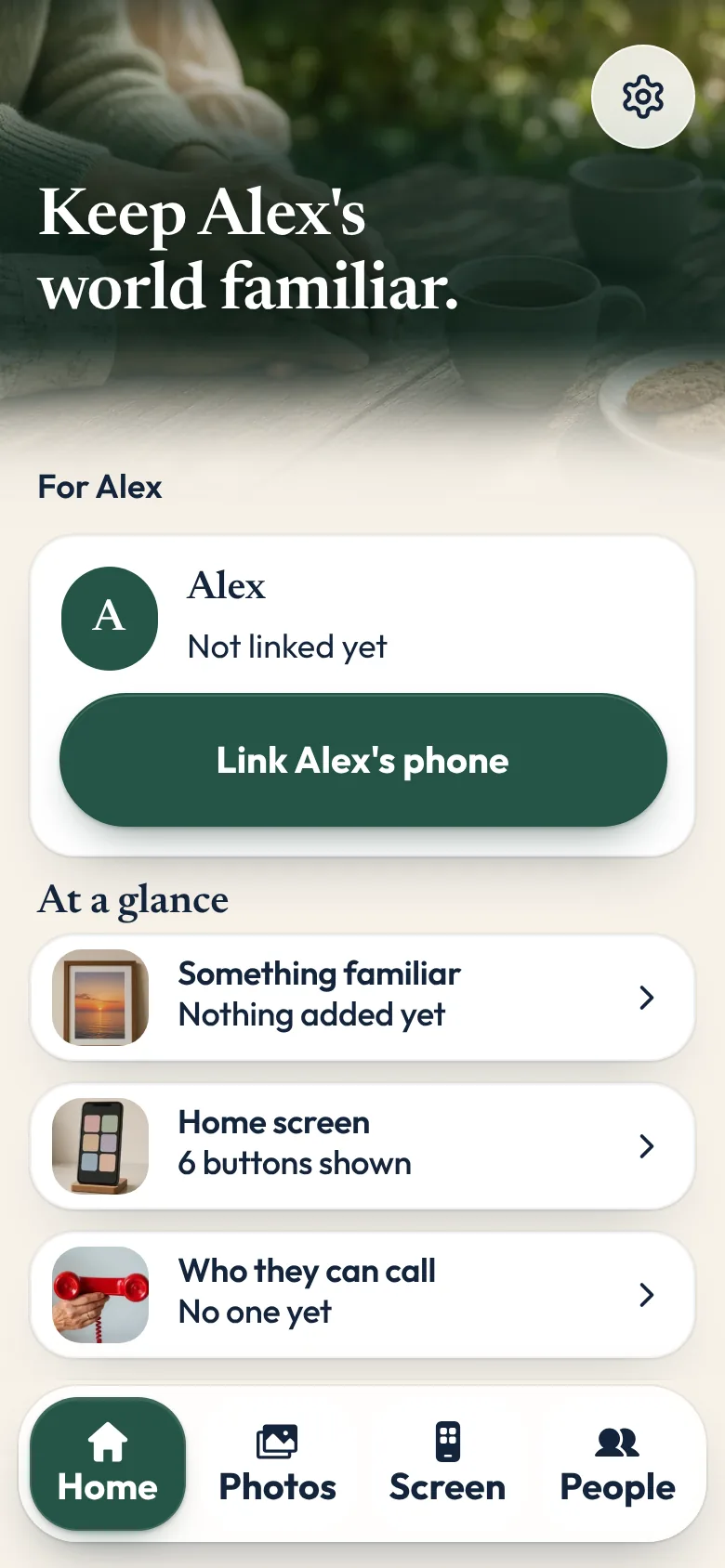
That is why we made Sunday Visit. Sunday Visit is a calm, Australian-made phone app for seniors and elderly people, with six big buttons for gentle sounds, family photos, easy movement, quiet games, memories and calls to people they trust. Family choose what's on it in a linked second app, Sunday Visit Carer.
One of its six big buttons is Call. They tap a name, then "Call Sam", and the phone's own dialler opens with the number ready. They press Call themselves.
Memories has questions to share with a visitor, or to think about quietly, from growing up and home to music, food and celebrations. They can skip any.
Their phone decides who stays linked.
In an emergency, call Triple Zero (000), or your local emergency number outside Australia.
You can try Sunday Visit in your browser, with example people and photos.
It works on Android 8.0 or newer and iOS 15 or newer. Both apps are on Google Play. Get Sunday Visit for their phone and Sunday Visit Carer for yours. You can find them at sundayvisit.com.au.
Questions families ask
How common is loneliness in elderly people in Australia?
The AIHW reports that among Australians aged 65 and over, the share experiencing loneliness fell from 20% in 2001 to 15% in 2024, based on the HILDA survey.
How can I help a lonely elderly parent?
Start small: a call at the same time each week, a visit with something to share, and a phone that's easy to use. You can also ask about the Aged Care Volunteer Visitors Scheme, or FriendLine for anyone 18 or over who feels lonely.
Is there a phone line for lonely people in Australia?
FriendLine is an anonymous phone and chat service for anyone 18 or over who is feeling lonely. Register for a call or chat at friendline.org.au. It is not a crisis service. For crisis support, call Lifeline on 13 11 14, and in an emergency call Triple Zero (000).
Can an app help an elderly parent feel less lonely?
Sunday Visit puts calls to trusted people and family photos a tap away. Sunday Visit is on Google Play.
More guides for families
- How to stay in touch with elderly parents who live far away
- 50 questions to ask elderly parents and grandparents
- Caring for elderly parents in Australia: where to start
- Share family photos on a phone, in one shared album
Something else? The help page has more, or email hello@sundayvisit.com.au.