
Chair exercises for seniors: 7 gentle seated exercises
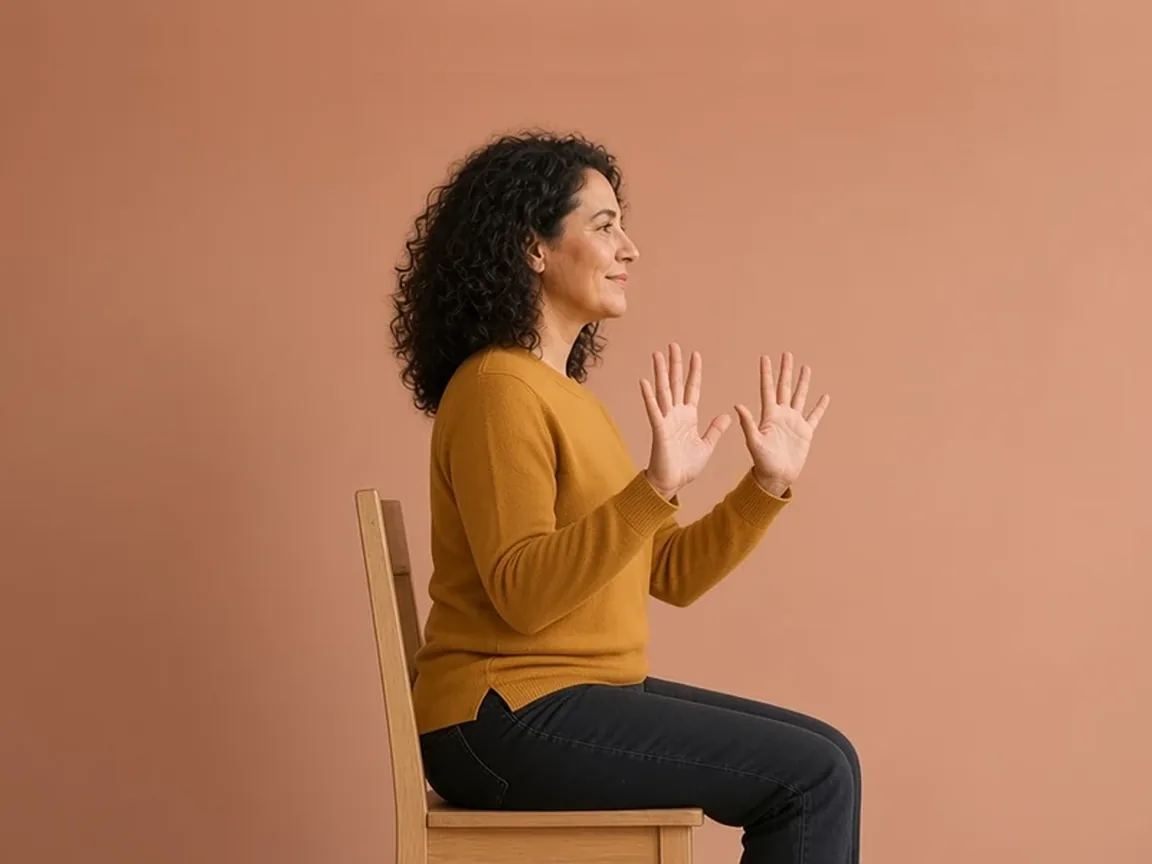
Chair exercises, also called seated exercises, let seniors and elderly people move gently without standing up. They can suit someone who is less steady on their feet, tires quickly, or spends much of the day sitting.
Here are seven gentle chair exercises to try at home, with a photo of each. They are the same steps as In a chair in Sunday Visit's Move. Go slowly, and only do what feels comfortable.
Before you start
- Talk to their doctor or a physiotherapist first if they've had two or more falls in the past 12 months, a recent heart problem, shortness of breath, chronic pain or another serious medical condition. That is the advice of Safe Exercise at Home, made by Australian physiotherapists.
- Use a solid, stable chair with no wheels. The NHS suggests a chair without arms, so the arms don't get in the way.
- Sit with feet flat on the floor and knees at about a right angle.
- Clear the space around the chair, turn on a good light, and keep a glass of water and a phone within reach.
- Wear loose, comfortable clothes.
Step 1. Sit comfortably
Feet flat on the floor, hands resting in your lap. Let your shoulders drop.
Only if comfortable. Stop if sore or dizzy.
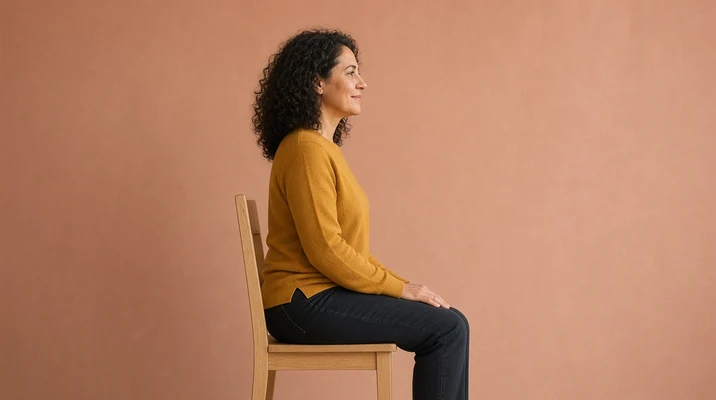
Step 2. Roll your shoulders
Slowly roll your shoulders backwards in gentle circles.
A few times, at your own pace.
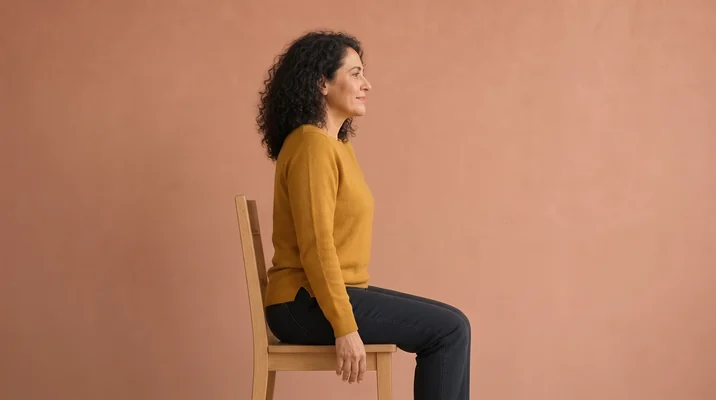
Step 3. Turn your head
Look slowly over one shoulder, then back to the middle, then over the other.
Only as far as feels comfortable.
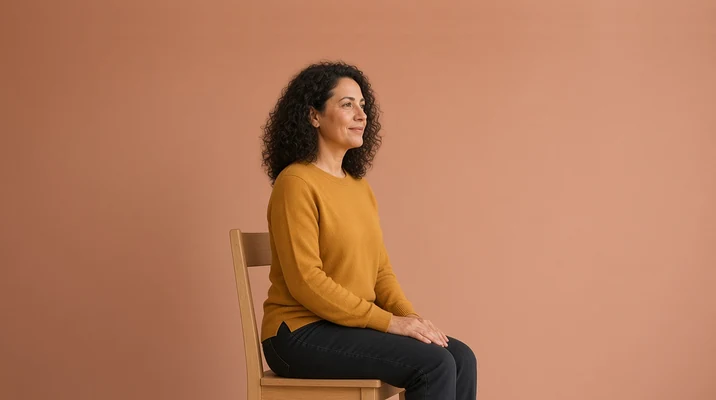
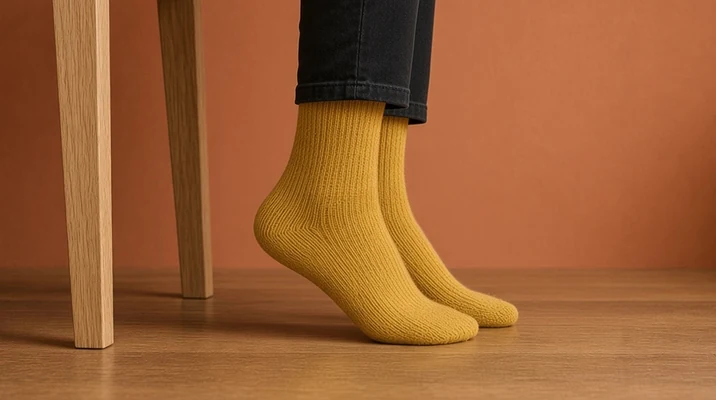
Step 4. Lift your heels
Lift one heel, then the other, as if walking slowly on the spot.
Keep your toes on the floor.
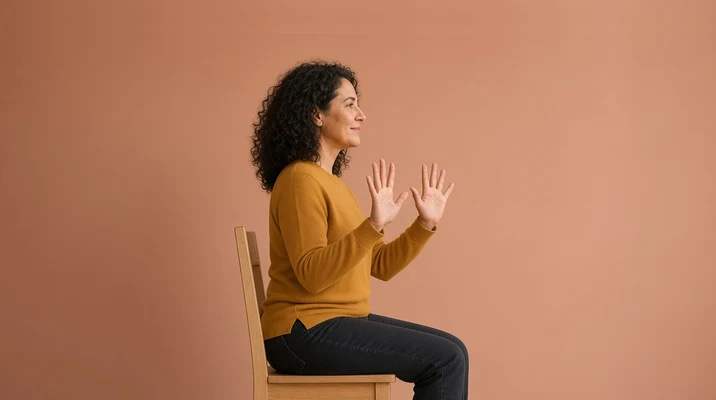
Step 5. Open and close your hands
Spread your fingers wide, then make a soft fist. Open and close a few times.
Go slowly, at your own pace.
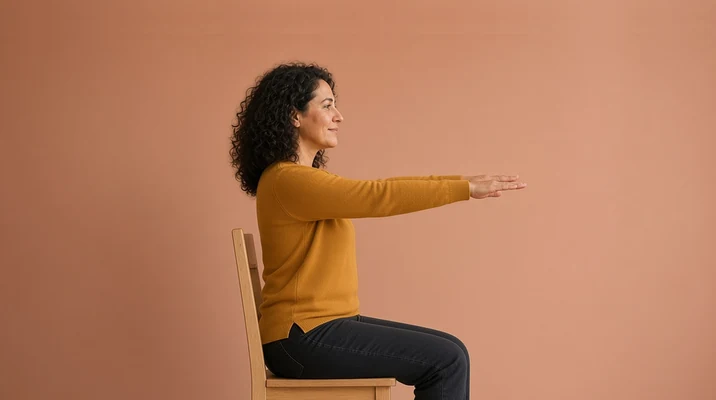
Step 6. Reach forward
Float your arms out in front, as if holding a big beach ball. Then let them rest.
Breathe normally as you reach.
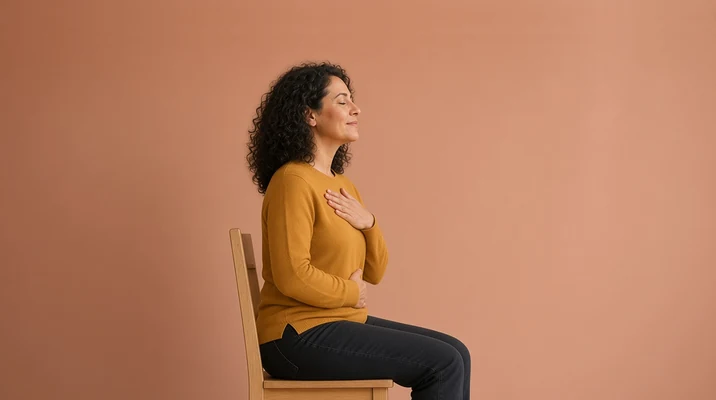
Step 7. One slow breath
Breathe in slowly through your nose, and out through your mouth.
Notice how your body feels after moving.
How often should seniors do chair exercises?
Little and often can work well. Safe Exercise at Home suggests that short bits of exercise, done more often, may work best, and that being active for five minutes every hour is a good aim.
Australia's physical activity guidelines for people aged 65 and over say to break up long periods of sitting as often as possible, and to be active on most days. The guidelines also include activities for strength, balance and getting around, so seated exercises are one part of the picture. Their doctor or a physiotherapist can suggest what suits them.
When to stop
Stop straight away if they feel dizzy, get chest pain or feel unwell, and talk to their doctor before trying again. In an emergency, call Triple Zero (000).
Chair exercise videos for seniors
If they would like to follow along with someone, Safe Exercise at Home has exercise videos for older people, made by Australian physiotherapists and endorsed by the Australian Physiotherapy Association. Its programs come in three levels. Level 1, Foundation, is for people who walk slowly, use a walking aid or feel unsteady, and includes a beginner workout in a chair.
If you're worried about falls, ask their doctor or a physiotherapist about balance and strength exercises.
Chair exercises on their phone
Some people find it easier to follow one step at a time, with a picture, on their own phone.
That is why we made Sunday Visit. Sunday Visit is a calm, Australian-made phone app for seniors and elderly people, with six big buttons for gentle sounds, family photos, easy movement, quiet games, memories and calls to people they trust. Family choose what's on it in a linked second app, Sunday Visit Carer.
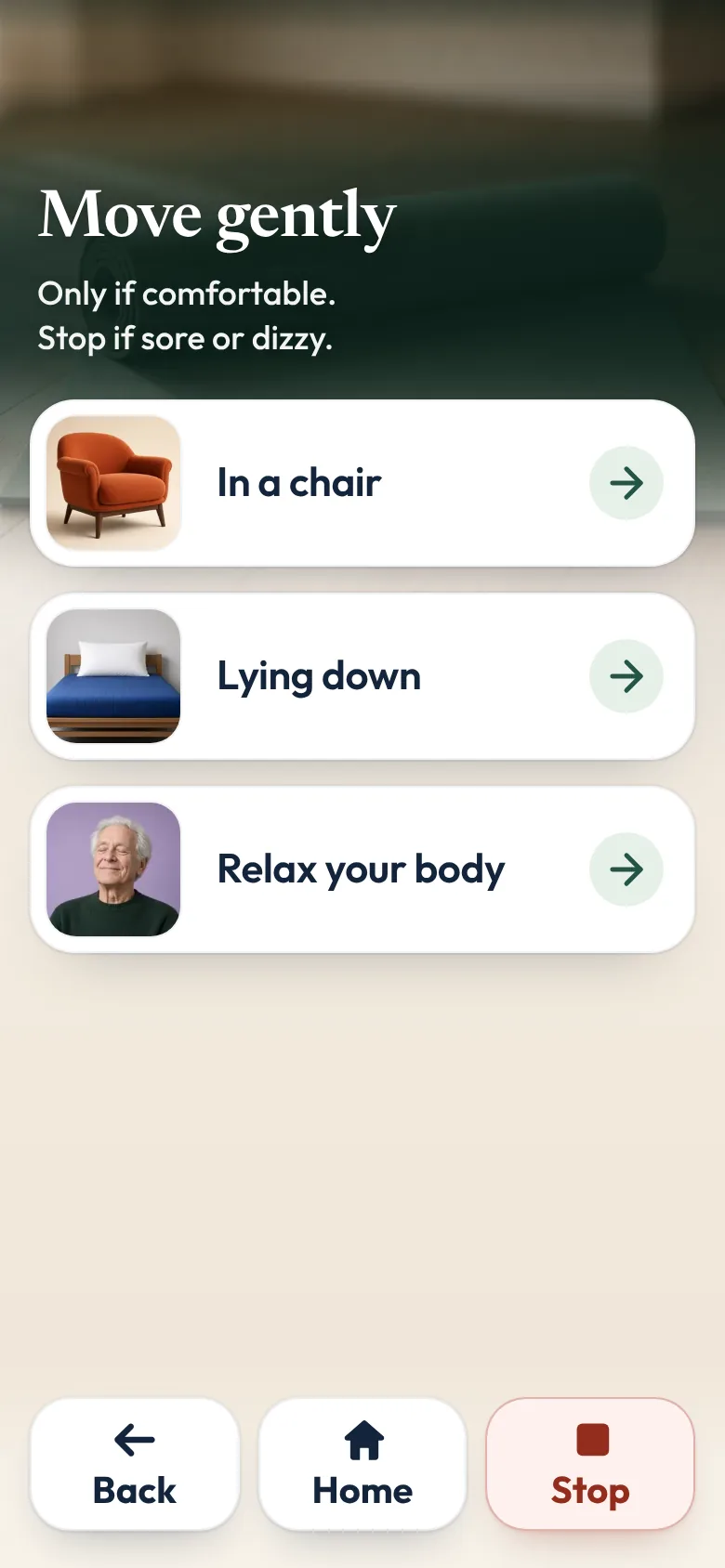
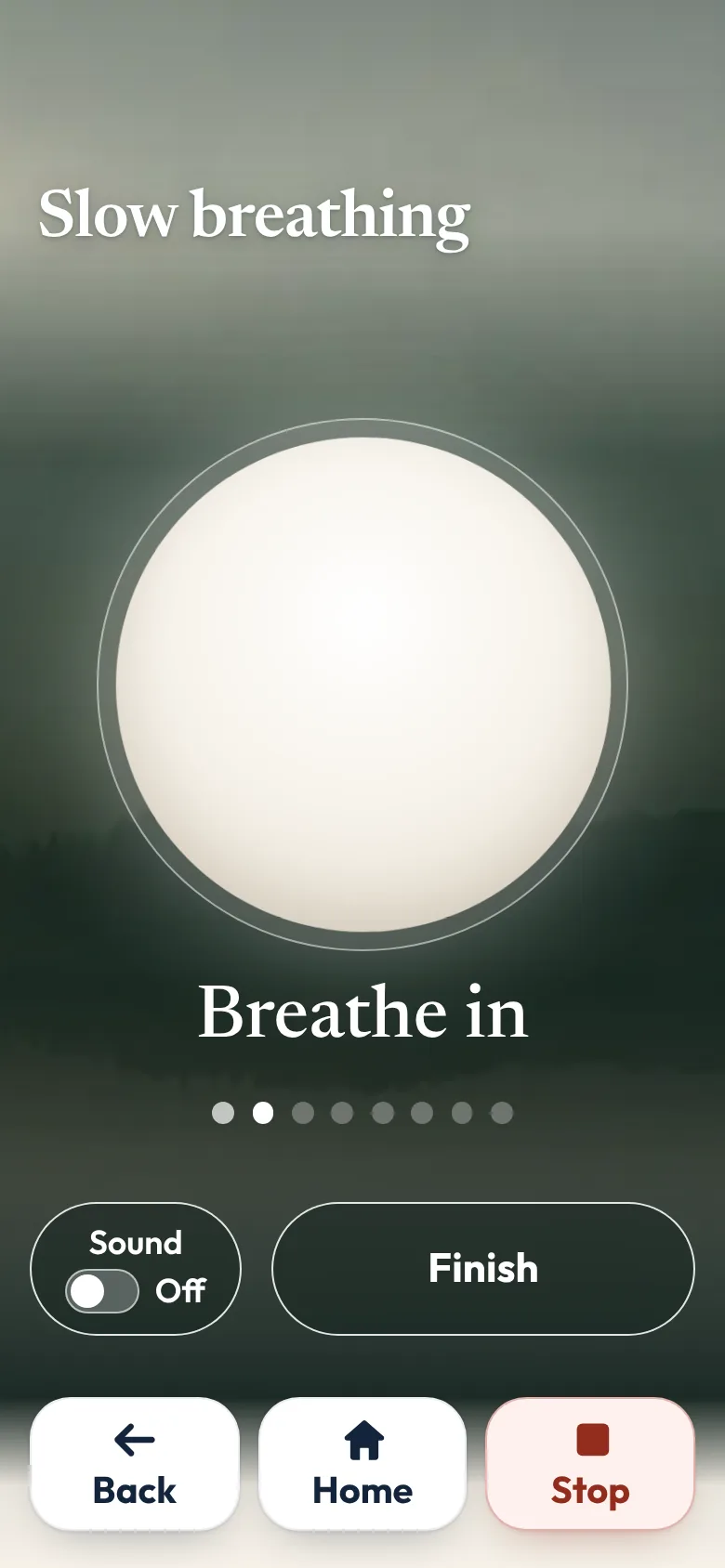
Move has In a chair, Lying down and Relax your body, a slow body scan. "Only if comfortable. Stop if sore or dizzy."
In a chair shows the seven steps on this page one at a time, each with its photo. There's no counting and no pressure.
In an emergency, call Triple Zero (000), or your local emergency number outside Australia.
It works on Android 8.0 or newer and iOS 15 or newer. Both apps are on Google Play. Get Sunday Visit for their phone and Sunday Visit Carer for yours. You can find them at sundayvisit.com.au.
Questions families ask
What are good chair exercises for seniors?
Gentle movements they can do sitting down: sitting tall, shoulder rolls, slow head turns, heel lifts, opening and closing the hands, reaching forward and a slow breath, each at their own pace.
How often should elderly people do chair exercises?
Little and often. Safe Exercise at Home suggests being active for five minutes every hour, and Australia's guidelines for people aged 65 and over say to break up long periods of sitting as often as possible.
Are chair exercises safe for the elderly?
Ask their doctor or a physiotherapist before starting if they have had falls, heart problems, breathlessness, chronic pain or another serious condition. Stop if they feel dizzy, get chest pain or feel unwell.
Do chair exercises help prevent falls?
If you're worried about falls, ask their doctor or a physiotherapist about balance and strength exercises.
Is there an app with chair exercises for seniors?
Sunday Visit's Move has In a chair, with the seven steps in this guide and a photo for each, plus Lying down and Relax your body. It works on Android 8.0 or newer and iOS 15 or newer. Sunday Visit is on Google Play.
More guides for families
- Calm games and activities for seniors, with no ads
- Activities for people with dementia at home
- Apps for elderly parents in aged care: what to look for
- Gift ideas for elderly parents and grandparents
Something else? The help page has more, or email hello@sundayvisit.com.au.